
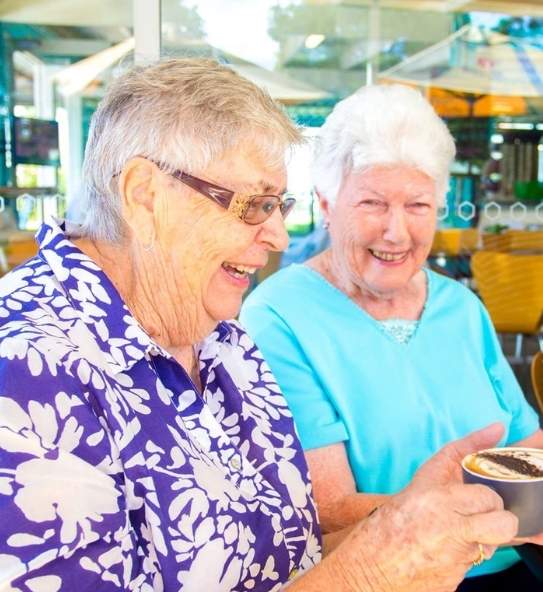

Certificate III in Individual Support (Ageing) Port Macquarie
A mix of on-campus, virtual, online and workplace training.
Individual Support
Part time (Up to 15 hours per week)
Duration: 5 months
Start date: 2 Feb 2026 (First day of attendance online or on campus)
End date: 19 Jun 2026
For more information and to enrol visit the TAFE NSW website.

Certificate IV in Ageing Support
CHC43015
Start Date: Flexible
Duration: 12 - 24 months
Delivery Options: Online/Blended
Delivery Locations: Macksville, Kempsey or Coffs Harbour
For more information and to enrol visit the NV College website.

LGBTI+ Awareness and Inclusion Training for CHSP Service Providers.
Val’s LGBTI Ageing & Aged Care training provides practical information regarding supporting older LGBTI+ people accessing care for staff working at all levels across the CHSP sector.
It also includes information about sector reforms, requirements and frameworks as they relate to diversity and inclusion, with an emphasis on rights-based, person-centred, trauma aware care for older LGBTI+ people.
For more information and to book follow the links below:
Part 1: Foundations
Part 2: Actions for inclusion

Supported Decision-making for Aged Care Providers: OPAN eLearning.
A new legislated supported decision-making approach commenced on 1st November under the new Aged Care Act.
The OPAN (Older Persons Advocacy Network) eLearning program for aged care workers, professionals and providers explains supported decision-making under the Aged Care Act 2024, provider obligations, how it applies in practice, the role of registered supporters, and how independent aged care advocates can assist with supported decision-making.
For more information about OPAN eLearning resources visit the OPAN website.

Natalya Hughes: ‘The Interior’ – Artist Talk & Exhibition Opening
Come and hear Special Guest Speaker Natalya Hughes talk at the official opening of her exhibition 'The Interior'.
When: Saturday, 7 February 2026 from 4:30pm to 7pm
Where: Yarrila Place, Coffs Harbour
For more information and tickets visit The Interior Talk and Exhibition Eventbrite site

Chair Yoga – Coffs Harbour
Enhance physical, mental, and emotional wellbeing for all ages and fitness levels - experience the tranquility and rejuvenation of Chair Yoga!
Whether you're seeking to enhance flexibility, reduce stress, or improve posture, our gentle yet effective practices are tailored to meet your needs and promote holistic wellness.
Location: Learning Lab, Level 2, Harry Bailey Memorial Library, Yarrila Place, 27 Gordon Street, Coffs Harbour
Date: Fourth Wednesday of every month (next session Wednesday 28th January 2026)
Time: 10:30am – 11am
Cost: FREE
National CHSP ATSI Cultural Safety Community of Practice
Interim First Nations Aged Care Commissioner Andrea Kelly will be presenting at the Cultural Safety Community of Practice.
Cultural safety is a collective commitment that spans from board-level governance to direct bedside care. By aligning our systemic policies with personalised, in-person experiences, we can build a culture where every person receiving care feels respected, valued, and safe.
Register here for the second national CHSP Aboriginal and Torres Strait Islander Cultural Safety Community of Practice on 28th January 2025 and engage with guest speaker, Andrea Kelly, Interim First Nations Aged Care Commissioner.
Andrea will share insights and knowledge in a personal and storied way and may be joined by a representative from the Aged Care Quality and Safety Commission.

Tools to Calculate Aged Care Contributions
New tools are available to help older people, and their families understand what they might need to contribute to their aged care costs.
These tools support people who are:
- entering the Aged Care system
- already receiving services and will transition to the new arrangements from 1 July 2025
- already receiving services and considering switching to the new fee arrangements when the new Aged Care Act starts in November 2025.
- To see how much you might pay for services use the Support at Home Fee Estimator.
Vision Australia’s 360 on Aged Care
Vision Australia is pleased to announce the launch of Season 2 of 360 on Aged Care, the Vision Australia Radio podcast that shares real stories and practical advice to help older Australians who are blind or have low vision live safely and independently, while knowing their rights and advocating for themselves.
This season’s episodes:
Episode 1: Keeping your balance – Simple steps to prevent falls.
Episode 2: Navigating public spaces safely – Tips for getting out and about with confidence.
Episode 3: Creating a safe home environment – Making your space work for you.
The podcasts can also be streamed from your preferred podcast platform.
Catch up on 360 on Aged Care here.
While season 1 focused on self-advocating and understanding core rights, season 2 offers practical insights that can make a real difference at home, in the community, and in everyday routines

‘Everyday Tools to Help Mob’ Guide
The latest guide from Independent Living Assessment offers practical solutions to make everyday tasks simpler and safer.
The LiveUp Everyday Tools to Help Mob Guide lists tools from kettle tippers and ergonomic scissors to handy gardening aids, these tools are designed to support independence at home.
Developed as part of the LiveUp healthy ageing initiative, the guide was created in collaboration with Aboriginal and Torres Strait Islander organisations and older community members.

Mental Health First Aid Guidelines – Confusion in Older People
Have a read of this extensive and useful resource covering many topics associated with confusion and dementia in older people:
Confusion in Older People: Mental Health First Aid Guidelines

Literacy Coaching and Support
Forster Library offers free one-on-one tutoring for adults, whether English is your first or second language.
Tutors can help with:
- filling out forms
- understanding mail
- writing and reading
- using computers.
Flexible session times are available.
We also welcome volunteer tutors—a great opportunity to give back to the community.
Contact Forster Library on (02) 7955 7001 to learn more or get involved.

Daily Wellness Habits to Maintain Independence E-book
Learn how to maintain independence in your everyday life through simple gentle habits, including morning routines, nutrition and mindfulness

Ageing Australia Budget Recommendations
Ahead of the 2026 federal budget, Ageing Australia is advocating for a series of recommendations ahead of the 2026 federal budget to provide an adequately funded aged care sector with enough staff to grow alongside Australia's ageing demographics.
Invox's Letter to the Minister summarises provider feedback on Support at Home reform and lists priority actions identified by providers.
There isn’t any content in this section at present. Please check again soon.

Supports in our Region
Our region offers various welfare services, including the following:
- Neighbourhood Centres for emergency aid, food, and family support
- Salvation Army for food parcels and help with bills
- LifeHouse Care & Vinnies for low-cost groceries and essential items
- Financial - Centrelink for government payments; and specialised help like CHSS for disability support and Blue Sky Community Services for financial wellbeing assistance, with the National Debt Helpline (1800 007 007) as a key starting point for urgent financial issues.
Find these and other services on the Community Directory website.

Mid North Coast Virtual Care
Emergency Departments are for emergencies: Is the Emergency Department the best place for you or your patient?
If you have a mild illness and it’s not an emergency, consider if there is a better way to get better.
MNC Virtual Care can direct you or your patient to a GP or nurse for advice or assistance over the phone, or help link and refer you to the right service to best meet your health needs.
For more information read the MNC Virtual Care flyer here or visit the Mid North Coast Local Health District website.
Preventing Heat Stress in Older People
Below is some useful information, provided by MidCoast Council, regarding the effects of heat on older people,
With rising temperatures, summer is a time of higher heat-related risk for older people. For aged care providers and workers, now is the time to prepare for the heat, and take steps to stop heat-related illness. Heat causes more people to die each year in Australia than any other natural hazard. When heatwaves occur, the death toll routinely reaches into the hundreds.
People over 65 are at highest risk from the heat
Older people’s bodies don’t cope with sudden stresses as quickly or as well as younger people’s bodies. For example, an older person’s skin doesn’t sweat and cool the body down as efficiently as a younger person’s does. Heat-related illness can get worse very quickly in older people. This can lead to rapid clinical deterioration (a fast decline in their health) and even death. That’s why it’s important to recognise and respond to heat-related illness in older people early and urgently. Look out for these signs:
- a sudden rise in body temperature
- confusion or altered mental state
- seizures
- nausea and vomiting
- loss of consciousness
- a weak, rapid pulse.
If you see any of these signs it’s a medical emergency that requires immediate first aid to cool the person down and a call to emergency services. Heat stress can also make existing health conditions worse. This includes conditions that are common in older people, such as diabetes, kidney disease and heart disease. Many heat deaths are recorded as heart attacks.
Other risk factors in the heat
Older people are already more at risk of heat-related illness, but in particular those who:
- are frail or have a low body mass – they can heat up more easily have dementia – they may not plan well, remember to drink regularly or realise they’re getting hot
- have difficulty staying hydrated – for example, people:
- with modified diets (including thickened fluids)
- on restricted fluids
- taking medications to reduce fluid retention
- have mobility problems and other physical challenges – for example, people who can’t:
- move into the shade or a cooler space by themselves
- remove their own clothing or bedding layers when they feel hot.
Know your environment and how the temperature changes
Residential aged care providers need to know about environmental risks in their facilities' buildings such as:
- indoor areas in care homes that can't be air conditioned or easily cooled
- indoor areas where the sun shines through the glass
- outdoor areas that change from shade to full sun during the day
- outdoor areas that are hidden from view.
Providers should ensure that residents are not left for prolonged periods in these areas where temperatures fluctuate over the day.
Workers at residential aged care homes should always:
- know and monitor the temperatures in different parts of the home and its outdoor areas
- know where residents are at all times
- make sure people are wearing suitable clothing for the conditions.
Fluid intake and preventing dehydration
Fluid intake and hydration are important because they help regulate body temperature, support organ function, maintain blood pressure and prevent dehydration. For an older person, their body may not signal thirst as effectively.
When it’s warm, remind your workers to:
- monitor vulnerable people and make sure they have enough fluids
- encourage people to drink fluids more often
- know the signs of dehydration, such as:
- dry mouth and tongue
- heat rash
- going to the toilet less often or having less heavy continence pads
- urgently attend to older people who say they’re hot or thirsty, or who look like they are
- offer people lukewarm (not cold) sponging or showering to help them cool down
- remind people to wear sunscreen, hats and protective clothing if they could be in the sun and help them to do this
- keep people out of the sun – particularly older people who might not want to come back inside when encouraged to do so.
Providing home care in the heat:
Home care providers face unique challenges compared to residential aged care homes when it comes to monitoring older people during heat, such as:
- less frequent monitoring – home care workers may only visit once or a few times a day
- limited environmental control – each older person’s home will be different and some may lack air conditioning or proper ventilation
- reliance on the older person – they may forget to drink, close curtains or turn on cooling devices.
This makes it harder for workers to monitor an older person and detect signs of dehydration or heat stress.
Home care providers should:
- have a heat action plan for each vulnerable person. This should include:
- strategies for reducing their exposure to extreme heat
- information about who to contact if they become unwell and need medical attention.
- Make sure that the people you care for:
- spend as little time as possible outside during extreme heat events
- wear the right clothing for the conditions
- have access to enough fluids, such as water
- have cooling devices that work and are switched on. If they don’t have air conditioning, a fan blowing with a wet sheet or towel in front of it (not over it) can also work well.
- Educate workers how to:
- recognise signs of heat-related illness
- respond in an emergency
- provide first aid for heat stress, dehydration and heat stroke.
Home care providers must make sure people are clinically assessed, if there are any signs that their health is getting worse.
If you’re concerned about an older person’s wellbeing in a heatwave, you should act.
Depending on how concerned you are, you should call:
- a family member
- the person’s general practitioner (GP) or another medical professional
- emergency services (triple zero [000]).
Dr. Mandy Callary
Chief Clinical Advisor
