

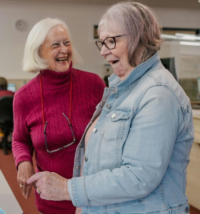
Live Life in Colour – A Seniors Festival 2026 Event
Let's celebrate! Join us for a vibrant morning of short presentations covering your rights as you age, travel and road apps, and digital decluttering tips. Peruse the variety of local information stalls on caring, legal issues, and volunteering opportunities across Coffs Harbour, helping you stay informed, confident, and thriving as you continue to bloom.
Date: Tuesday, 3 March 2026
Time: 10.30am to 12.30pm
Location: Level 2, Harry Bailey Memorial Library, Yarrila Place
Cost: Free
For more information, check out the Live Life in Colour event webpage.

Living Well Expo 2026
The Living Well Expo focuses on engaging older persons, people with a disability, and their carers, to improve health outcomes and social connections. The Expo aims to inform and support the local community through engaging activities, demonstrations and access to relevant services and community organisations that can enable everyone to live their best life. We will also be promoting access to health, recreational, educational, and social supports through over 50 information stalls. We would love to see you there!
Date: Wednesday, 13th May 2026
Time: 10am - 2pm
Venue: Coffs Harbour Showground Exhibition Hall: 123 Pacific Highway, Coffs Harbour
Visit our website for more information: The Living Well Expo - Blue Sky Community Services
If you are interested in being a stallholder, please register here: Living Well Expo 2026 – Stallholder Registration - Blue Sky Community Services
Please contact tessadouglas@bluesky.org.au if you have any questions.

LGBTQIA+ Awareness Training
This is a FREE event for aged care staff and providers.
We all encounter members of the LGBTQIA+ community in our daily lives. Building a basic understanding of LGBTQIA+ people and communities can help you feel more confident and respectful in your interactions.
This FREE training is designed to enhance your foundational knowledge and will address common questions, such as:
- What do LGBTQIA+ and other terms related to gender and sexuality mean?
- What should I know about the trans community?
- Why is inclusion important?
- How can I be an effective ally?
When: Wednesday, 27th May
Time: 10am to 11:30am
Register via the Awareness Training event registration page.

Conversations that matter
Conversations that Matter
Please Join CESPHN, Waverley Council and SESLHD an online information session focused on what matters most to you.
We’ll cover:
- What advance care planning is
- Understanding future health and care preferences
- Decision-making capacity and substitute decision-makers
- How to start conversations with family and health professionals
- Ways to record your choices so they’re known and respected
This session offers practical guidance for anyone wanting to plan ahead and have a say in their future care.
When: Tuesday 17 March 2026, 3.00pm – 4.00pm
Register here: https://events.teams.microsoft.com/event/4b52920f-4330-4b13-b99e-3f302f5fefd4@e823fe37-46da-43cd-8809-74cda6b846b4

Chill & Chat – Free Men’s Program
Looking for a relaxed space to connect, unwind and enjoy some time just for you?
Chill & Chat is a FREE program creating a safe, welcoming space for men to come together, play games, socialise and enjoy some snacks.
This all abilities program is open to men experiencing mental health challenges, living with disability, supporting someone with disability, facing social or physical barriers or anyone simply wanting some extra “me time” to focus on their wellbeing.
Chill and Chat events are held at Port Macquarie and Wauchope.
Port Macquarie events:
- Date: 1st and 3rd Wednesdays of every month
- Time: 1.30pm to 3pm
- Location: Port Macquarie Neighbourhood Centre - 2 Dodds Street, Port Macquarie
Wauchope events:
- Date: 2nd and 4th Wednesdays of every month
- Time: 1.30pm to 3pm
- Location: Wauchope Neighbourhood Centre - 4 Tallowood Avenue, Wauchope
For more information, check out the Chill & Chat page on the Port-Hastings Council website.

Motor Neurone Disease Online Course
Expand your knowledge by signing up for the new free Motor Neurone Disease MOOC (Massive Open Online Course). Developed by the University of Tasmania's Wicking Dementia Centre, this self-paced course offers expert insights into all aspects of the disease, to help improve awareness and care worldwide.
For more information and to enrol visit the course webpage on the University of Tasmania Wicking website.

Board Game Cafe
A friendly space to connect and enjoy a cuppa with other seniors. Come along, bring a friend and meet new people.
Bookings not required.
Date: Last Thursday of every month
Time: 10.30am to 12.30pm
Location: Nambucca Heads Library - 23 Ridge Street, Nambucca Heads
Cost: Free
For more information, check out the Nambucca Valley Council event webpage.

CHSP Providers’ Compliance with Child Safety Statement
Meals on Wheels NSW Ltd. has developed a factsheet for CHSP providers to determine their compliance with the Child Safety Statement. The Child Safety Statement is now required for all Australian Government grantees and is due on 31 March for the previous 12 month period.
This factsheet is relevant to CHSP providers with a Grant Agreement or Deed of Variation which includes: Clause G8A - interaction with children is unplanned or unexpected (incidental).
References are relevant to CHSP providers anywhere in Australia.
You can read the CHSP Providers and Child Safe Compliance (2026) document here.
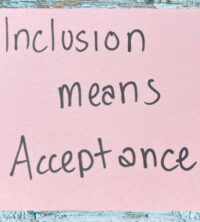
Putting Quality into Practice
Delivering culturally safe care for diverse communities
This session is focused on strengthening inclusive and culturally-safe care practices for diverse communities, including First Nations peoples, culturally and linguistically diverse (CALD) groups, and people living in rural and remote areas. This hour-long workshop supports service providers to deepen their understanding of quality standards and improve the delivery of person-centred supports.
Date: Thursday, 5th March 2026
Time: 11am
Register here on the Putting Quality into Practice event webpage.

Cultural Diversity in Tomorrow’s Aged Care
Cultural Diversity in Tomorrow’s Aged Care is a 90-minute online webinar for aged care professionals that explores how the sector can prepare for demographic and technological shifts while strengthening inclusion and culturally responsive practice, with practical insights on planning for diverse consumer needs, workforce engagement, and the role of tools like AI to support future-focused care delivery - helping attendees better understand and act on cultural diversity as part of quality aged care.
Date: Wednesday, 11th March 2026
Time: 11.00am - 12.30pm
Register here on the Cultural Diversity in Tomorrow's Aged Care event webpage

Learning Agility in Aged Care Workshop
Explore how agile thinking and behaviour support effective decision making
This session introduces the concept of Learning Agility and its importance in an aged care environment characterised by ongoing reform, increasing complexity, and heightened consumer expectations. Participants explore how agile thinking and behaviour support effective decision making, adaptability, and leadership capability across frontline and management roles.
Session Focus
- What Learning Agility is and why it matters in a high-change sector
- Key dimensions of agility and their relevance to aged care practice
- Current sector challenges that require agile responses
- Applying agile thinking to typical workplace scenarios (case studies)
- Strategies individuals can use to strengthen their own learning agility
- Reflection and action planning to embed agile behaviours on the job
Date: Wednesday, 18th March 2026
Time: 1pm - pm
Location: Online - For more information and to register visit the Learning Agility in Aged Care registration page.

Strategic Conversations in CHSP Services – where to start
Imagine unlocking new possibilities for your organisation through collaboration and strategic partnerships. On Tuesday, March 24th at 10am join Central Coast Sector Support and Development for 'Strategic Conversations in CHSP Services – where to start', a focused case study exploring the practical steps to becoming merger ready.
Discover how to open your organisation to collaboration, navigate the complexities of mergers, and position yourself for sustainable growth. This is your chance to gain actionable insights that can transform your approach and prepare you for the future.
Spaces are limited - don’t miss this opportunity to start the conversation that could reshape your organisation’s path.
Date: Tuesday, 24th March 2026
Time: 10am - 11.30am
Register here on the Strategic Conversations in CHSP Services - where to start - Eventbrite webpage.

Age Friendly Futures Live: AI in Practice Expert Q&A
Date: Wednesday 25th March 2026
Time: 12.00pm - 1.00pm AEST
Registration: Age Friendly Futures Live: AI in Practice Expert Q&A
⚠️ Update: This webinar was initially scheduled for 10 March. However, one of our panellists has been caught up in the travel disruptions in the Middle East. Rather than go ahead without the full panel, we've moved the session to Wednesday 25 March.
If you've already registered, your spot is secured and you'll receive the joining link the day before the new date.
Compliance anxiety is keeping aged care providers stuck. This Q&A will get you unstuck.
Providers are asking the questions: Can we use ChatGPT for documentation, and how? What happens if staff upload resident data? How do we actually implement AI without triggering an investigation?
This webinar answers them directly. You'll hear from the expert who understands the regulatory landscape, the CEO who's already implementing AI in aged care operations, and the developers who build these systems. No hype, and no fear-mongering either—just straight answers to the questions stopping you from moving forward.
What you'll walk away with:
- Clear guidance on what can be done with AI in your operations (and how)
- Real examples of implementation from an aged care provider using it now
- Technical insight into how these tools work and where the actual risks are
- Regulatory context so you understand what compliance actually requires
Who should attend:
Board members, CEOs, managers of aged care providers, and anyone making decisions about AI adoption who needs practical answers instead of speculation.
Format:
60-minute live Q&A. Bring your questions - we'll answer them.

Support at Home: What’s in, what’s out…
Hosted by Diana Farrow, Paul Sadler and Roland Naufal, this session explores how Support at Home has introduced flexibility as well as risk. Across the country and in QANDA we keep hearing the same question: What do we do when the guidance doesn’t give an answer?
This session is about building defensible judgement in the grey.
What this briefing covers
- The shift in expectations: from rule-following to defensible judgement
- Separating personal expense, SaH support and other system’s responsibility
- Handling common grey-zone scenarios
- Ensuring care plans, service agreements and claims tell the same story
Who should attend
- Care Managers, Coordinators and Team Leaders
- Finance, billing and claims teams
- Operations, governance and compliance leads
- Executives overseeing service delivery and risk
Date: 25th March 2026
Time: 11.00am - 12.00pm
Registration: Free Briefing: Support at Home what's in, what's out

Leadership that Lasts: Training for CHSP Providers
Hosted by Blue Sky Community Services, this training is for Aged Care CHSP sector workers, or anyone else who is interested in a leadership role, or would like to in the future, and wants to become a more effective, compassionate leader. Leading for the long term equips leaders with the clarity, confidence, and practical tools needed to build teams that thrive, not just today, but well into the future.
Sustainable leadership is no longer a 'nice to have'; it is the foundation of strong teams, healthy culture, and meaningful outcomes. Leadership That Lasts is a practical, evidence‑informed workshop designed to help leaders understand the science of effective leadership and translate it into everyday action.
This workshop cuts through the noise by demystifying leadership theory and turning it into simple, repeatable behaviours that build trust, strengthen culture, and improve performance across the organisation.
The workshop will be facilitated by Dane Jacka; Dane has a passion to support leaders and organisations to thrive in this frantic world. He has unique experience as an organisational consultant and advisor, coupled with decades of practice in mindfulness and meditation. These skills are innovatively combined to deliver services that transform leaders and organisations from the inside out. Dane has an MBA and additional qualifications in management and project management. He is certified to teach meditation through UC Berkeley and is a board member of the International Mindfulness Teachers Association.
Date: Wednesday, 15th April 2026
Time: 10.30am - 11.30am
Register here: Leadership that Lasts (online training)

National CHSP Aboriginal and Torres Strait Islander Cultural Safety Community of Practice
The second session of the National CHSP Aboriginal and Torres Strait Islander Cultural Safety Community of Practice was held late last month. This was an important conversation exploring the tension between choice and risk, supporting self-determination for older people, and how we keep showing up in the operational and daily tasks of supporting cultural safety in our services when there is also bigger system change that needs to happen.
Thank you to presenters Andrea Kelly (Interim First Nations Aged Care Commissioner), Gary Rake (Deputy Commissioner Regulatory Operations, Aged Care Quality and Safety Commission) and our facilitators Meredith Elton and Uncle Garry Kafoa.
To register for the third session visit the 3rd National CHSP Aboriginal and Torres Strait Islander Cultural Safety Community of Practice registration webpage.
Date: Wednesday, 29th April 2026
Time: 12pm - 1.30pm

NATSIAACC Membership
NATSIAACC welcomes all organisations to take up one of their memberships. Are you an Aboriginal or Torres Strait Islander-led organisation delivering ageing or aged care services, or considering doing so?
Are you a non-Indigenous aged care provider or organisation who delivers ageing or aged care services to Elders?
If yes, NATSIAACC exists for you.
You can be part of a collective voice to Government and decision makers. You can access information and analysis about systems and changes. You can collaborate with other NATSIAACC members, and the Elders Council (once established).
This will all ultimately help Elders to access care and support that is culturally safe, trauma aware and healing informed and recognises the importance of their personal connections to community and Country.
For more information visit the NATSIAACC website.

Trauma-informed Care Training
This training video introduces the principles of trauma-informed care and how past trauma can influence an older person’s behaviours, choices, and engagement with services. It provides practical guidance on creating safe, respectful, and empowering care environments.
The video supports CHSP workers to strengthen relationships, reduce re-traumatisation, and deliver compassionate, person-centred support.
You can watch the video here on the Latrobe YouTube channel

Aged Care Code of Conduct – introductory video for older people
This video is to give older people, their representatives, families and registered supporters an overview of the Aged Care Code of Conduct. It describes the behaviour expected of registered providers, their responsible persons (e.g. board members and Chief Executive Officers) and aged care workers. It describes how providers and the people who provide your care must behave and treat you.
Watch here: Aged Care Code of Conduct – introductory video for older people | Aged Care Quality and Safety Commission

Free Health Coaching
The Get Healthy NSW service offers free phone and online health coaching to help you make lifestyle changes to improve your health. Delivered by NSW Health, the service is available to people over 16 years of age living in NSW.
When you join, you’ll receive 6 or more confidential coaching calls with a university-qualified health coach.
Our coaches can support you to:
- set and achieve your health goals
- eat well and keep active
- reduce the amount of alcohol you drink
- reach and stay at a healthy weight
- stay active during and after cancer treatment
The program is designed to fit in with your life, with coaching available at a time that works for you.
Sign up on the Get Started webpage or ask your health professional for a referral.

Nutrition and Living with Heart Disease
When living with heart disease, keeping your heart healthy is important to avoid further problems.
Discover key information on the Heart Foundation's website.
Are you Caring for Someone with a Life-limiting Illness?
- Visit the CareSearch Community Hub to learn about what palliative care is, and what to expect.
- 10 questions to ask about palliative care in residential aged care is a helpful checklist when thinking about aged care.
- Read CareSearch's Palliative Care Booklet for Patients, Carers, and Families to learn more.
- CarerHelp's Question Prompt List can help you prepare for talking with your GP or the care team.

Have Your Say on the Higher Everyday Living Fees (HELF)
The Australian Government Department of Health, Disability and Ageing is reviewing the new higher everyday living fee (HELF) and wants to hear from you about your experiences.
Some aged care homes offer optional lifestyle services that go beyond the standard required by law. These services can attract an additional fee, known as ‘higher everyday living fees’.
Whether you’re an older person, family member, registered supporter or advocate, your feedback is important and will help us make sure these services and fees are fair for everyone.
Follow this link to take the survey by 7 April.

Daily Wellness Habits to Maintain Independence E-book
Learn how to maintain independence in your everyday life through simple gentle habits, including morning routines, nutrition and mindfulness

Mental Health First Aid Guidelines – Confusion in Older People
Have a read of this extensive and useful resource covering many topics associated with confusion and dementia in older people:
Confusion in Older People: Mental Health First Aid Guidelines

‘Fase3’ Tool to Support Aged Care Choices
Choose to maximise control of your future care needs.
Can you see the time approaching when you may need some help at home? Or home may no longer be the best place for you to live? Or is Mum or Dad, or another family member, in need of support and you’re not sure what’s available, or who to talk to?
Researching your options, the costs and how to start the process will help you and your family to remain in control. Use this tool to help you stay in charge of your life and make your own decisions. If you are making decisions for someone else, use this tool to help think about what they might decide to do themselves.
Choose your pathway for quality of life through your older years.
For more information visit the Fase3 website.

Dementia Support
Need a hand or a little advice? Specialist advisors are ready to help with any concern, large or small.
Chat with a Dementia Australia expert Advisor via live messaging, free and confidentially, for information and support.
Available 24/7, every day of the year.
For more information and to chat with an Advisor visit the Helpline webpage.
Translating and Interpreting Services for Aged Care
Translating and interpreting services are available to help people from culturally and linguistically diverse backgrounds engage with aged care.
These services are free for older people, their families and carers, and government-funded aged care providers.
Translating and Interpreting Services for Aged Care | Department of Health, Disability and Ageing

Literacy Coaching and Support
Forster Library offers free one-on-one tutoring for adults, whether English is your first or second language.
Tutors can help with:
- filling out forms
- understanding mail
- writing and reading
- using computers.
Flexible session times are available.
We also welcome volunteer tutors—a great opportunity to give back to the community.
Contact Forster Library on (02) 7955 7001 to learn more or get involved.
There isn’t any content in this section at present. Please check again soon.

AIDER Support
The AIDER (Assist Infirm, Disabled and Elderly Residents) program is a free, one-off service which support some of our most at-risk community members.
The program helps people live more safely and confidently in their home in areas where bush fires may start.
The AIDER program is designed for people who have limited domestic support available from family, relatives, friends or other services. This could include older people, people living with a disability, and people who are already receiving community assistance and services. Their property must also be on bush fire prone land (land that can support a bush fire or be subject to bush fire attack).
AIDER services can include:
- clearing gutters
- thinning vegetation around the home
- removing leaf and tree debris
- trimming branches from close to the home
- mowing or slashing long grass.
If you would like to know more about the free, one-off AIDER service, call 1300 011 737 or email aider@rfs.nsw.gov.au or download our fact sheet. You can also fill out the form online: AIDER - NSW Rural Fire Service

National Relay Service
The NRS provides a range of different types of call services, depending on your needs and preferences.
Relay Officers are specially trained staff who help with every call. Relay Officers will:
- change voice to text or text to voice
- change Auslan to English or English to Auslan
- stay on the line throughout the call to help you, without getting in the way or changing what is said.
The NRS is available 24 hours a day, except for Video Relay calls. Video Relay calls are only available 7am to 6pm (Australian Eastern Standard Time) Monday to Friday, and 8am to 12pm on Saturdays. Video Relay calls are also not available on national public holidays.
The NRS is free and confidential.
You can make calls to emergency services through the NRS.

Auslan Emergency Interpreting App Now Available
The Auslan Emergency Interpreting (AEI) App is now available for Deaf and hard of hearing Australia, giving our community equal access to Triple Zero (000) for the first time in history.
To help you get started, we've created two short step-by-step demo videos for iPhone and Android.
Each video will show you how to download the app, open it for the first time, and get ready to make an emergency call with a NAATI qualified Auslan interpreter.
To find out more about the app and to watch the video, head to the AEI App webpage.
Preventing Heat Stress in Older People
Below is some useful information, provided by MidCoast Council, regarding the effects of heat on older people,
With rising temperatures, summer is a time of higher heat-related risk for older people. For aged care providers and workers, now is the time to prepare for the heat, and take steps to stop heat-related illness. Heat causes more people to die each year in Australia than any other natural hazard. When heatwaves occur, the death toll routinely reaches into the hundreds.
People over 65 are at highest risk from the heat
Older people’s bodies don’t cope with sudden stresses as quickly or as well as younger people’s bodies. For example, an older person’s skin doesn’t sweat and cool the body down as efficiently as a younger person’s does. Heat-related illness can get worse very quickly in older people. This can lead to rapid clinical deterioration (a fast decline in their health) and even death. That’s why it’s important to recognise and respond to heat-related illness in older people early and urgently. Look out for these signs:
- a sudden rise in body temperature
- confusion or altered mental state
- seizures
- nausea and vomiting
- loss of consciousness
- a weak, rapid pulse.
If you see any of these signs it’s a medical emergency that requires immediate first aid to cool the person down and a call to emergency services. Heat stress can also make existing health conditions worse. This includes conditions that are common in older people, such as diabetes, kidney disease and heart disease. Many heat deaths are recorded as heart attacks.
Other risk factors in the heat
Older people are already more at risk of heat-related illness, but in particular those who:
- are frail or have a low body mass – they can heat up more easily have dementia – they may not plan well, remember to drink regularly or realise they’re getting hot
- have difficulty staying hydrated – for example, people:
- with modified diets (including thickened fluids)
- on restricted fluids
- taking medications to reduce fluid retention
- have mobility problems and other physical challenges – for example, people who can’t:
- move into the shade or a cooler space by themselves
- remove their own clothing or bedding layers when they feel hot.
Know your environment and how the temperature changes
Residential aged care providers need to know about environmental risks in their facilities' buildings such as:
- indoor areas in care homes that can't be air conditioned or easily cooled
- indoor areas where the sun shines through the glass
- outdoor areas that change from shade to full sun during the day
- outdoor areas that are hidden from view.
Providers should ensure that residents are not left for prolonged periods in these areas where temperatures fluctuate over the day.
Workers at residential aged care homes should always:
- know and monitor the temperatures in different parts of the home and its outdoor areas
- know where residents are at all times
- make sure people are wearing suitable clothing for the conditions.
Fluid intake and preventing dehydration
Fluid intake and hydration are important because they help regulate body temperature, support organ function, maintain blood pressure and prevent dehydration. For an older person, their body may not signal thirst as effectively.
When it’s warm, remind your workers to:
- monitor vulnerable people and make sure they have enough fluids
- encourage people to drink fluids more often
- know the signs of dehydration, such as:
- dry mouth and tongue
- heat rash
- going to the toilet less often or having less heavy continence pads
- urgently attend to older people who say they’re hot or thirsty, or who look like they are
- offer people lukewarm (not cold) sponging or showering to help them cool down
- remind people to wear sunscreen, hats and protective clothing if they could be in the sun and help them to do this
- keep people out of the sun – particularly older people who might not want to come back inside when encouraged to do so.
Providing home care in the heat:
Home care providers face unique challenges compared to residential aged care homes when it comes to monitoring older people during heat, such as:
- less frequent monitoring – home care workers may only visit once or a few times a day
- limited environmental control – each older person’s home will be different and some may lack air conditioning or proper ventilation
- reliance on the older person – they may forget to drink, close curtains or turn on cooling devices.
This makes it harder for workers to monitor an older person and detect signs of dehydration or heat stress.
Home care providers should:
- have a heat action plan for each vulnerable person. This should include:
- strategies for reducing their exposure to extreme heat
- information about who to contact if they become unwell and need medical attention.
- Make sure that the people you care for:
- spend as little time as possible outside during extreme heat events
- wear the right clothing for the conditions
- have access to enough fluids, such as water
- have cooling devices that work and are switched on. If they don’t have air conditioning, a fan blowing with a wet sheet or towel in front of it (not over it) can also work well.
- Educate workers how to:
- recognise signs of heat-related illness
- respond in an emergency
- provide first aid for heat stress, dehydration and heat stroke.
Home care providers must make sure people are clinically assessed, if there are any signs that their health is getting worse.
If you’re concerned about an older person’s wellbeing in a heatwave, you should act.
Depending on how concerned you are, you should call:
- a family member
- the person’s general practitioner (GP) or another medical professional
- emergency services (triple zero [000]).
Dr. Mandy Callary
Chief Clinical Advisor
